

Even with modern welding techniques, welding defects remain one of the biggest challenges in the manufacturing and construction industries. These defects reduce the strength, durability, and safety of welded structures.
👉 In this article, we’ll explore the most common welding defects, their causes, and practical ways to fix them—making it easier for industries to improve quality control and avoid costly repairs.
1. Porosity (Gas Pockets in Welds)

Description:
Small holes or cavities form inside the weld due to trapped gas.
Causes:
- Contaminated surface (oil, rust, paint)
- Excessive moisture in electrodes or shielding gas
- Wrong welding parameters
Fixes:
- Clean and dry materials before welding
- Store electrodes properly
- Adjust shielding gas flow rate
2. Cracks in Welding

Description:
Cracks may appear on the weld surface or inside the joint. They are the most dangerous welding defect..
Causes:
- High cooling rate
- Improper joint design
- Residual stress
Fixes:
- Preheat the base metal before welding
- Use proper joint design and filler material
- Apply post-weld heat treatment (PWHT)
3. Incomplete Fusion

Description:
The weld metal fails to fuse properly with the base metal or previous weld pass
Causes:
- Low heat input
- Incorrect torch angle
- Improper electrode handling
Fixes:
- Increase welding current or voltage
- Correct torch angle (usually 10–15° tilt)
- Ensure proper cleaning between passes
4. Slag Inclusion
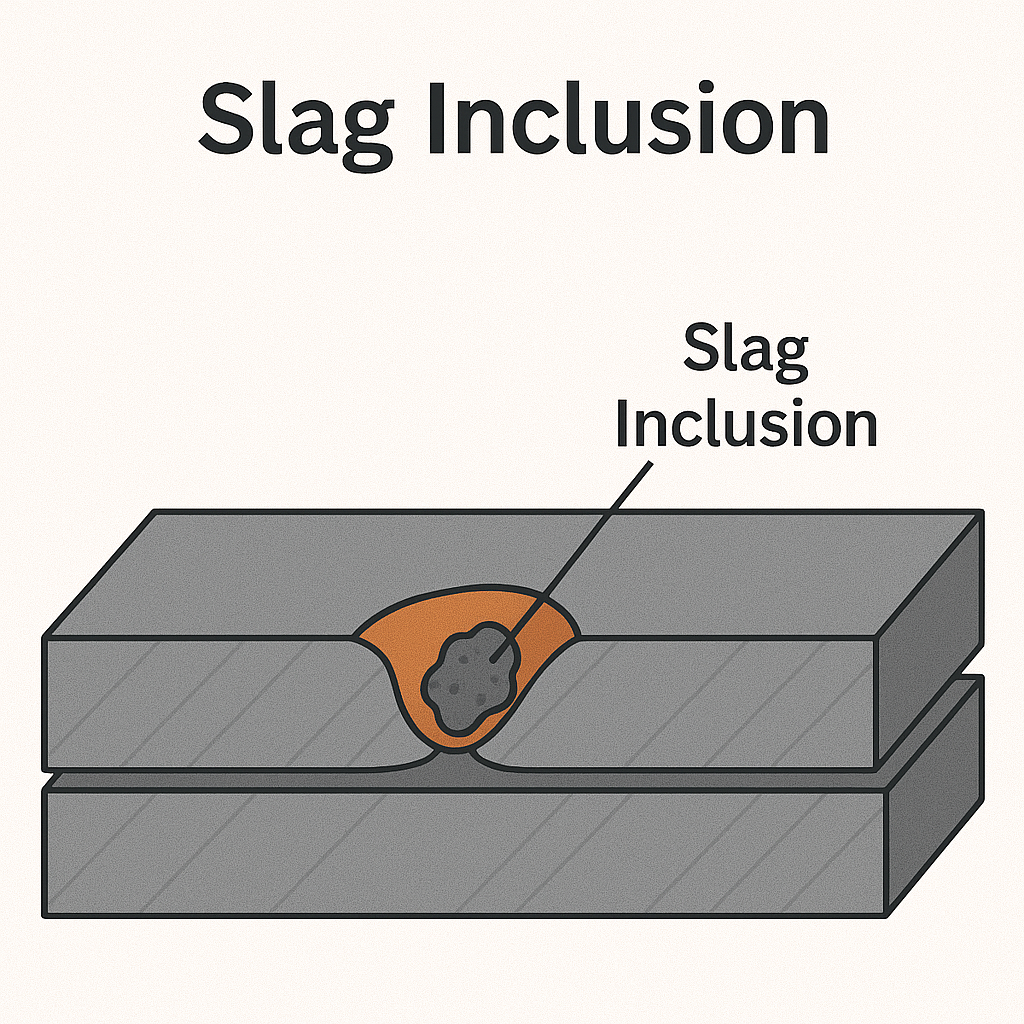
Description:
Non-metallic particles (slag) get trapped inside the weld metal
Causes:
- Improper cleaning between weld passes
- Wrong electrode angle
- Low welding current
Fixes:
- Remove slag carefully after each pass
- Use correct electrode angle
- Optimize welding parameters
- 👉 Learn about Slag Inclusion (Welding Handbook)
5. Undercut
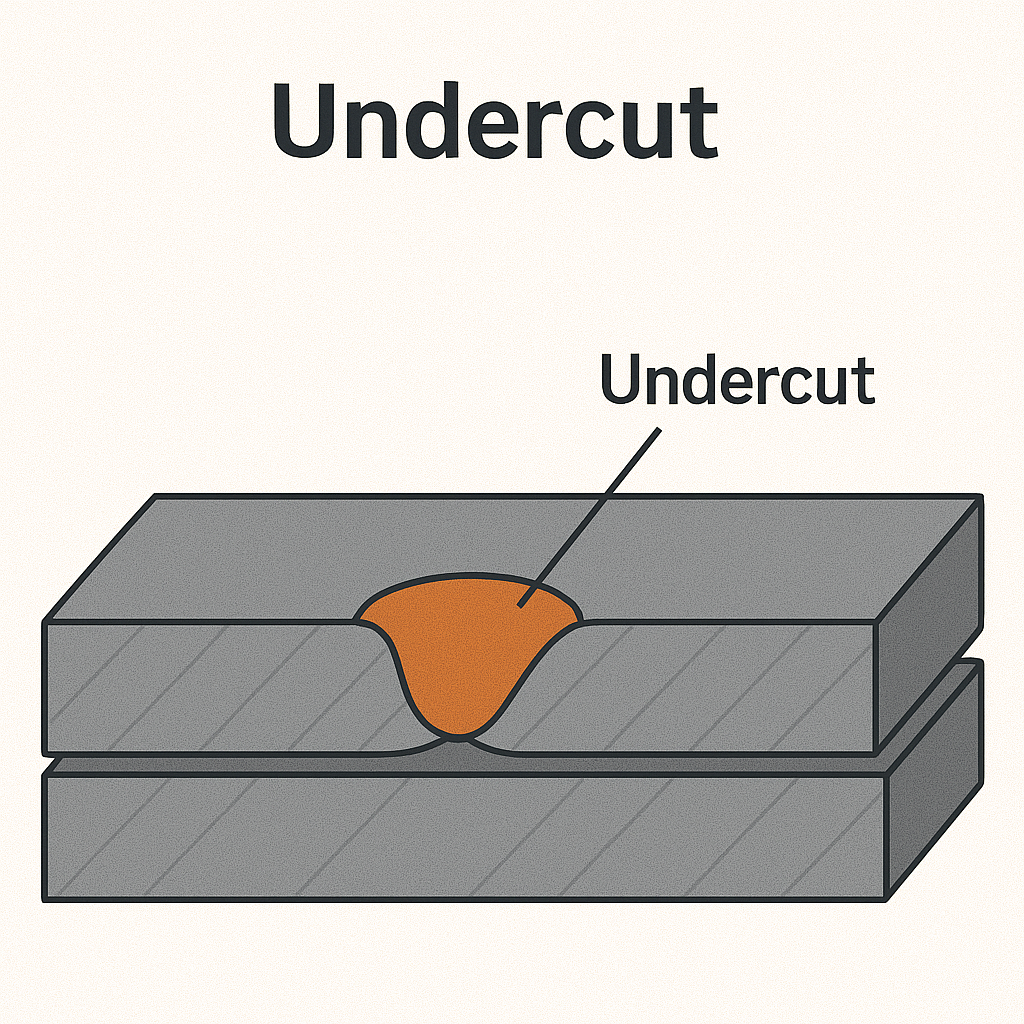
Description:
A groove forms at the weld toe, reducing the thickness of the base metal
Causes:
- Excessive heat input
- High welding speed
- Incorrect electrode angle
Fixes:
- Reduce current/voltage
- Slow down travel speed
- Adjust electrode position
6. Distortion (Warping of Material)
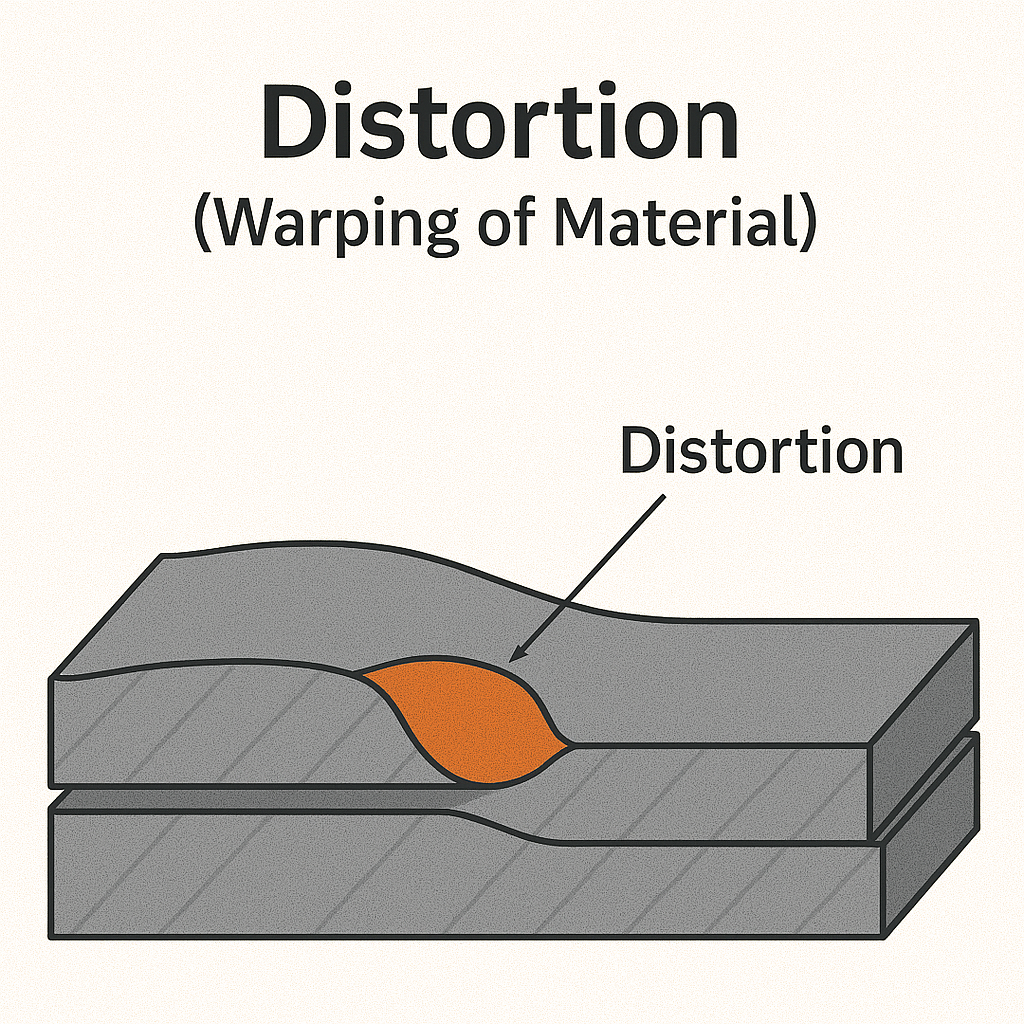
Description:
The welded metal bends or twists due to uneven heating and cooling
Causes:
- High heat input
- Uneven clamping
- Wrong welding sequence
Fixes:
- Use proper clamping and fixturing
- Apply back-step welding technique
- Use controlled heat input
7. Lack of Penetration
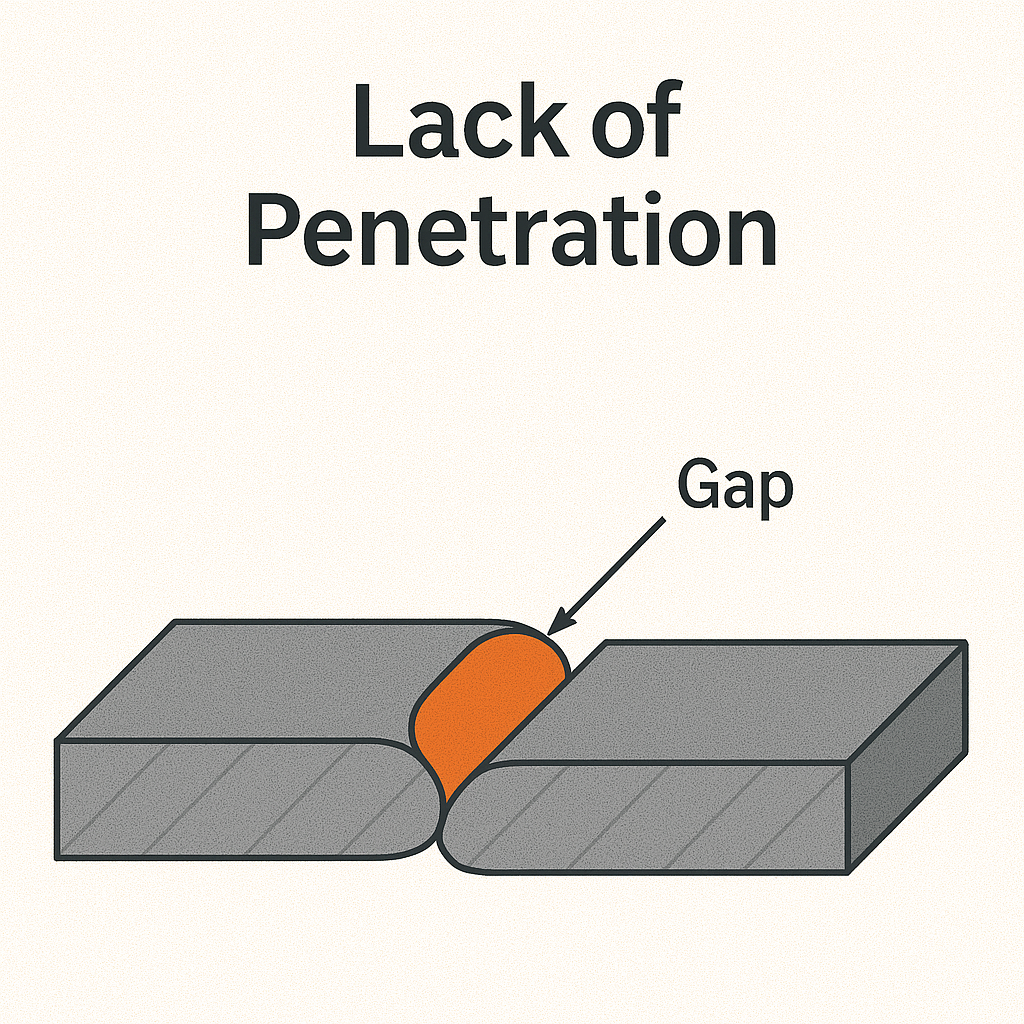
Description:
Weld metal does not extend fully through the joint thickness
Causes:
- Low current
- Incorrect joint design
- Poor edge preparation
Fixes:
- Increase current or voltage
- Improve joint preparation
- Use suitable welding technique
8. Overlap
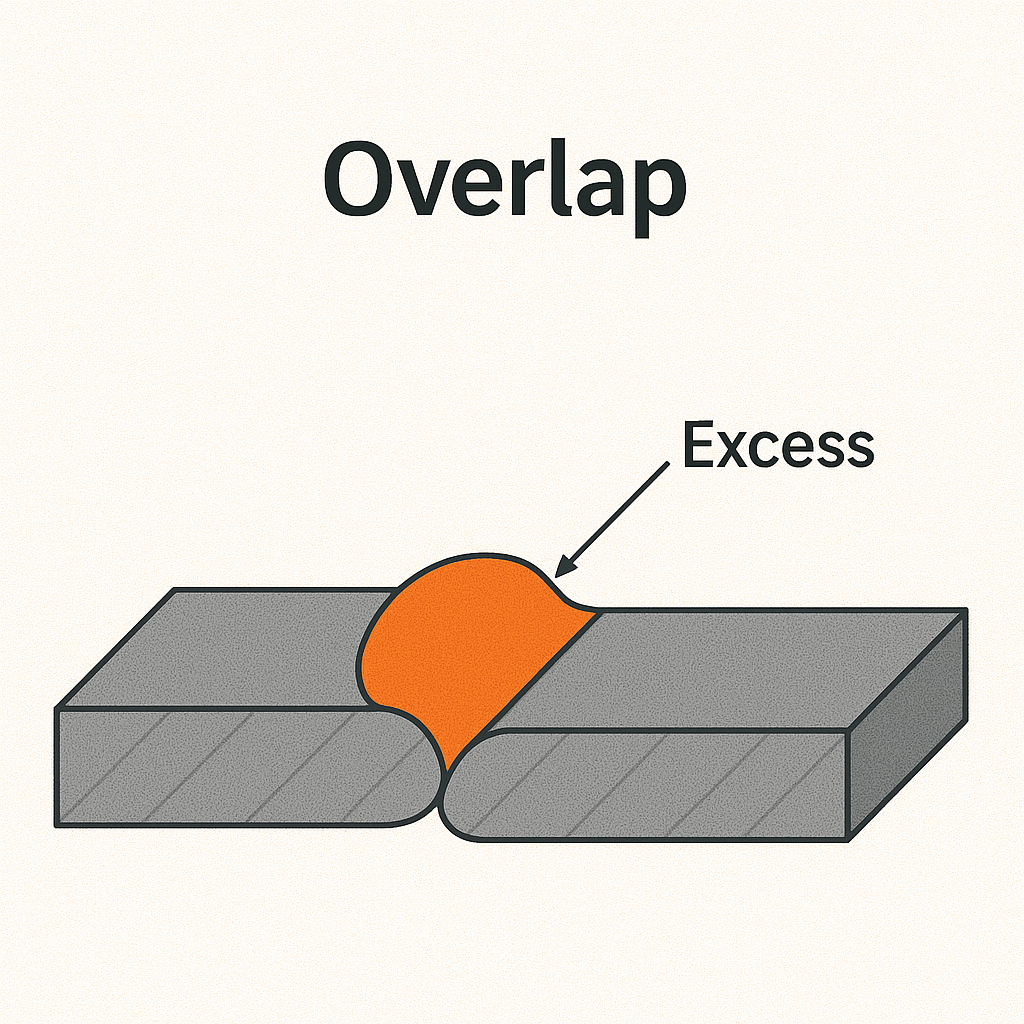
Description:
Weld metal overflows beyond the weld toe without bonding
Causes:
- Low travel speed
- Excess filler metal
- Incorrect torch angle
Fixes:
- Increase travel speed
- Reduce filler deposition
- Correct torch handling
Conclusion
Welding defects are a common challenge in industry, but with the right techniques, preparation, and inspection, they can be minimized or completely avoided.
✅ By following the best practices for cleaning, heat control, joint design, and welding parameters, industries can ensure strong, reliable, and defect-free welds—which means safer structures and reduced costs.